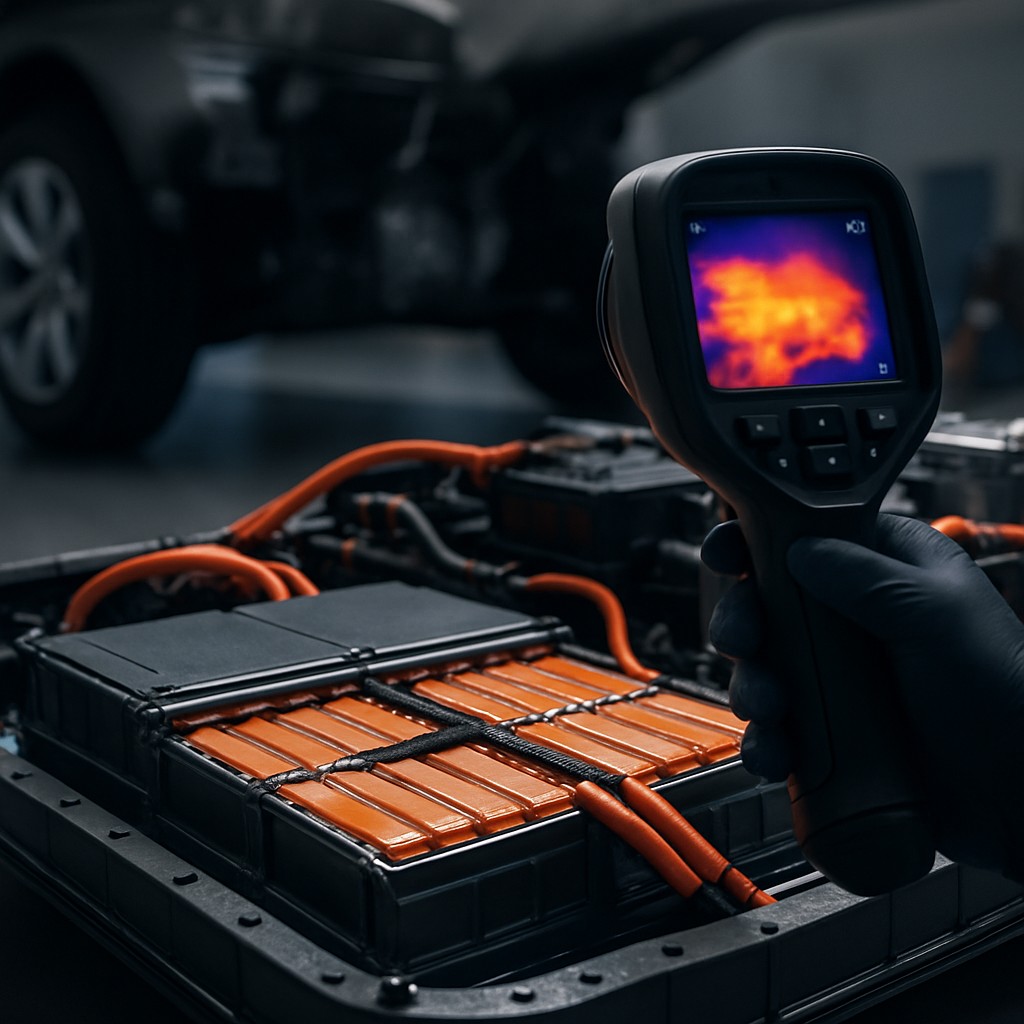
IAF AutoSafe™ is a Draft for Technical Review covering twelve vehicle safety and integrity domains through a proposed 1,000-point schedule, domain floors, mandatory gates and class-specific requirements.
IAF AUTOSAFE - First Edition
IAF AutoSafe™ Vehicle Testing, Assessment & Labelling System
A proposed whole-vehicle testing, assessment and labelling system built to connect crash performance, human factors, software, cybersecurity, energy hazards, post-crash response and evidence quality in one traceable decision.
Beyond the crash test. Evidence across the whole vehicle.
A high total cannot conceal a critical weakness. Floors, gates and class-specific requirements remain decisive.
AExceptional AutoSafe layerAt least 85% in every domain plus applicable gates and Class A requirements.920+
BAdvanced AutoSafe layerAt least 75% in every domain plus applicable gates and Class B requirements.850+
CStrong, balanced layerAt least 65% in every domain plus applicable gates and Class C requirements.760+
Explore a class
Class A: the highest proposed AutoSafe layer
A proposed minimum of 920 points and 85% in every domain. Applicable mandatory gates and Class A requirements must also be satisfied.
Every-domain floor 85%
This is a scoring threshold, not a survival probability.
These are proposed AutoSafe thresholds, not a guarantee of survival or freedom from injury.
12technical domains
1,000proposed total points
A-Fconfiguration-specific class
4 layerspoints, floors, gates, requirements
Development status: IAF-SS-V1 remains a First Edition - Draft for Technical Review. Technical validation, released protocols and formal adoption are required before operational vehicle ratings or labels may be issued.
A higher bar for vehicle safety
Designed to expose weak links, not reward a headline score.
Conventional consumer programmes often communicate results through a compact star outcome. AutoSafe is being developed as a broader evidence architecture: one that keeps physical, digital, human-factor and post-crash responsibilities visible.
No single-score shortcut
Every-domain floors and mandatory gates are intended to prevent an excellent result in one area from masking a serious weakness in another.
Safety beyond metal
Functional safety, intended-function limits, software integrity, cybersecurity and architecture-specific energy hazards sit beside physical crash evidence.
Trust needs traceability
The proposed class stays tied to an identified configuration, protocol edition, evidence record and verification reference - not to an entire brand or platform.
Public interest first. Evidence before influence.
AutoSafe is being developed to help consumers, engineers, fleets and public authorities ask better safety questions. Membership, sponsorship, payment or in-kind support cannot improve a class. The ambition is to build a technically defensible framework capable of raising expectations for vehicle safety in the years ahead - subject to independent technical review, validation and formal adoption.
The whole-vehicle perspective
How AutoSafe™ Structures Vehicle Safety
Twelve technical domains, presented in seven connected topic groups. Explore the evidence behind protection, prevention and integrity.
D03-D04
Survival space. Controlled crash energy.
Frontal, Side, Rear & Rollover Protection
Primary frontal, side, rear and rollover protection: the structure and restraints working together to protect occupants.
Crash energy management · Occupant injury evidence · Structural integrity
Passive and impact-activated exterior protection considers pedestrians and cyclists when contact occurs. Avoidance performance is scored separately in D02.
Head impact · Lower-extremity protection · Active exterior systems
Proposed evidence areas above remain subject to the released protocols. Each performance outcome has a defined scoring home. Pedestrian and cyclist avoidance belongs to D02; passive and impact-activated exterior protection belongs to D06. The same outcome is never scored twice.
One configuration. Connected assessment.Concept illustration — not an issued rating.
Confidence has a method
From an individual test to a defensible decision.
The proposed class connects valid evidence, every-domain floors, mandatory gates and independent review. Its meaning stays tied to the configuration and assessment conditions.
Relevant competence and methods, not a blanket laboratory designation.
Controlled methods
Calibration, instrumentation, uncertainty and data formats under released protocols.
Reproducible results
Correlation, reviewer competence and repeatability evidence before release.
Independent judgement
Clear separation from manufacturer interests and secure evidence handling.
Competence comes before recognition.
Facility scope, calibrated methods, laboratory correlation and operational release requirements must be established before authorised ratings can be issued. The draft does not designate a live approved laboratory network.
A proposed common language for consumers, manufacturers and public authorities — connecting a clear safety outcome with the evidence behind it.
For consumers
Clarity at a glance. Detail when it matters.
After programme release, an assessed A–F class would be presented with the configuration, edition, assessment envelope, limitations and verification record.
Domain-level evidence identifies improvement areas for a named generation and controlled configuration family — not an entire brand or platform. Relevant changes are reviewed against the assessed baseline.
The framework is being developed to support future policy, procurement and fleet-safety decisions through configuration-specific, traceable evidence. Operational results are not yet available.
Controlled evidence first. A defensible decision only after scope, validity, points, every-domain floors, gates and independent review.
Define the vehicle and evidence scope
Identify the generation, configurations, market, equipment, energy architecture, hardware and software before fixing the twelve-domain applicability and evidence plan.
Generate physical and digital evidence
Competent facilities execute released methods within their demonstrated scope. ISO/IEC 17025 accreditation applies to relevant laboratory activities where applicable.
Check points, floors and class requirements
The proposed twelve-domain schedule is evaluated against total thresholds, the floor in every domain, mandatory gates and class-specific requirements. A high total cannot bypass a critical weakness.
Review gates and production equivalence
Modifiers or caps apply only where specified by the released protocol. Initial production-equivalence evidence is distinct from the point total; D11 does not create a scheduled IAF audit cycle.
Make the decision traceable
After technical validation, formal adoption and operational release, eligible assessments may lead to a Vehicle Test and Rating Certificate, supporting report and authorised label record. The current draft does not authorise operational ratings or labels. F and Unrated are different statuses.
IAF-SS-V1 · First Edition — Draft for Technical Review. Explore the twelve domains, proposed class thresholds, evidence rules and mandatory gates. Technical validation and formal adoption remain pending.
Be part of a powerful movement driving safer, smarter, and more sustainable transportation systems worldwide. Connect with leaders, influence policies, and co-create the automotive innovations of tomorrow with the International Automotive Federation.


 D03-D04